

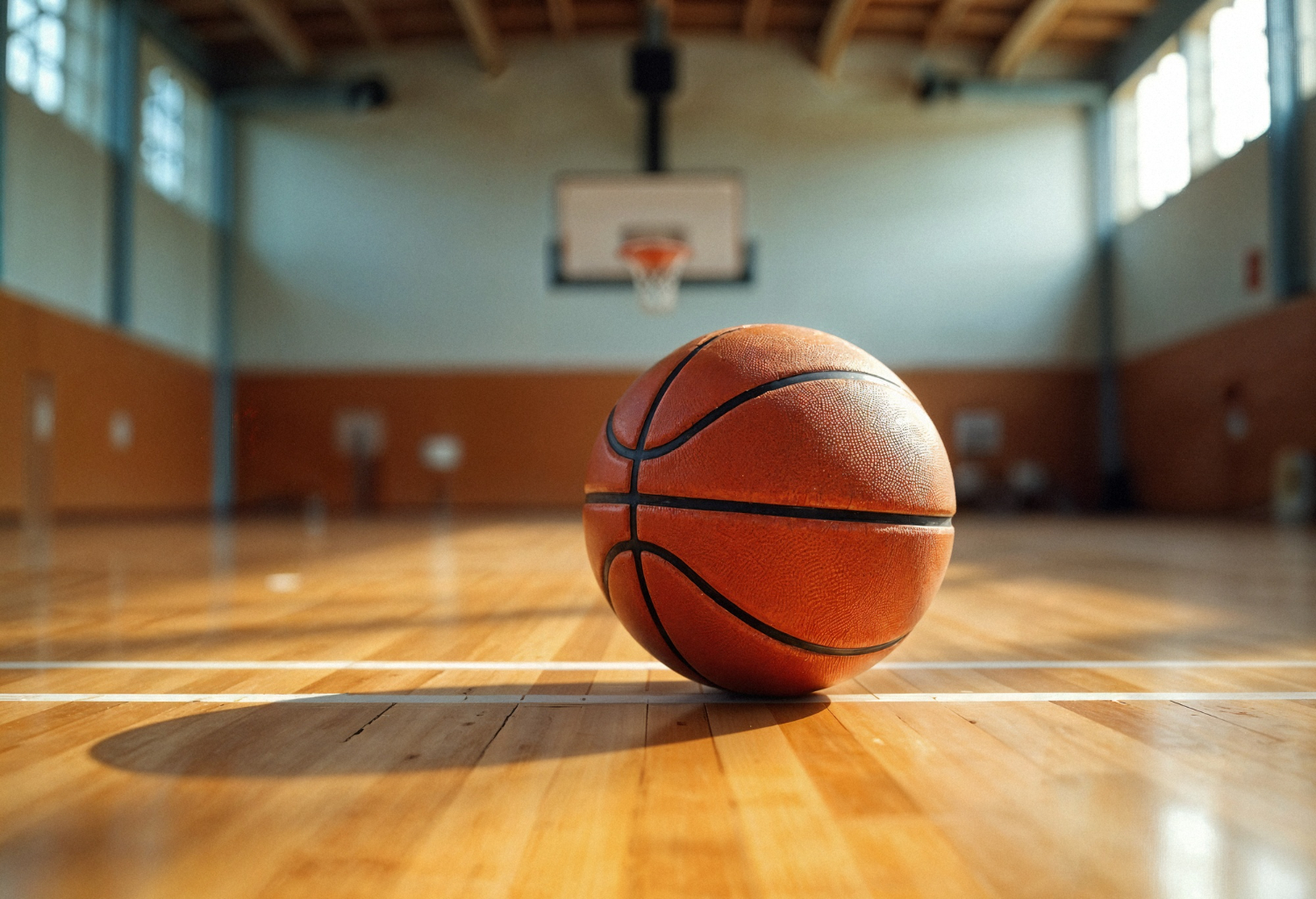
Walk into any professional basketball arena and look down. Beneath the squeak of sneakers and the thunder of a fast break, there is a quiet hero at work. It is maple hardwood, and it has been the gold standard for the game for nearly a century.
At Corlew and Perry, we have spent close to 100 years installing and caring for hardwood floors across Brentwood, Franklin, Nashville, Spring Hill, and Columbia, TN. Our team has watched flooring trends come and go, including waves of synthetic alternatives that promise to replace hardwood. Yet when the stakes are highest, the pros still choose wood. There is a reason that choice has held up for generations.
The science behind a maple court
Maple is not a random pick. It is one of the hardest, densest domestic woods available, with a tight grain that resists splintering under constant impact. The wood absorbs shock in a way synthetic surfaces struggle to match, giving players cushion without sacrificing the firm rebound a basketball needs.
That balance between softness and spring is what makes the game feel right. Athletes can plant, cut, and jump with confidence, and coaches see fewer lower-body injuries over long seasons. Synthetic courts can mimic the look, but they cannot fully replicate how a maple floor responds under a 250-pound athlete at full speed.
How ball bounce shapes the game
Ask any player, and they will tell you a dead spot on the floor changes everything. On professional maple, the bounce is consistent from the free throw line to the corner three. This predictability is one of the most overlooked reasons the NBA and NCAA have stayed with hardwood.
Why shock absorption matters for careers
Knees, ankles, and hips take a beating over a career. A well-built hardwood system sits on a sprung subfloor, which softens landings and reduces chronic wear on joints. Synthetic options are improving, yet they still tend to be either too rigid or too spongy for elite play.
Where synthetic surfaces fit in
Synthetic flooring is not a villain in this story. It has real strengths in recreational settings, multi-purpose rec rooms, and home gyms where moisture or heavy rolling equipment would damage wood. Vinyl and rubber surfaces are easier to clean and more forgiving of spills.
The trade-off shows up at the highest levels of competition. Most synthetics do not offer the same refinished life cycle as maple. A hardwood court, with regular care and periodic hardwood floor refinishing, can serve a school or arena for decades before needing full replacement.
The look that defines the sport
There is something unmistakable about a polished maple court under the lights. The warm tone, the clean lines, and the crisp team logo at center court all say basketball in a way no synthetic surface quite captures. When schools, churches, and arenas want that signature feel, they come to us for custom gym floor logos and game-line painting.
Long-term value for schools and gyms
Budget matters, and it is fair to ask whether hardwood pays off. Over a 40 to 50 year lifespan, maple usually proves more economical than replacing synthetic surfaces every 15 to 20 years. Factor in the prestige, the performance, and the resale value for a facility, and the math tends to favor wood.
Caring for a court that lasts generations
A hardwood court is not a set it and forget it purchase. It needs daily dust control, humidity monitoring, and periodic recoating to stay at peak performance. Neglect the maintenance, and even the finest maple will dull, warp, or develop soft spots that affect play.
The good news is that care is straightforward with the right partner. Our crews have refinished floors at some of the most recognized venues in Tennessee, and we bring that same attention to every school gym and home court we touch.
Talk to our team about your court
If you are weighing a new gym build, a refresh, or a full sand and finish, we would love to walk you through the options. Explore our full flooring services and see how we can help you make the right call for your court.


